
E-commerce · 7 min read
Shopee and TikTok Shop fees keep rising: do you need your own website?
Shopee and TikTok Shop raised their seller fees again in 2026. Here is what that does to your margin, and when a website of your own starts to make sense.
In this article
In October 2026 a Shopee seller posted a month of their numbers on Threads. They sold RM42,643. After platform deductions, cost of goods and Shopee ads, they kept RM2,185. The replies were full of sellers saying the same thing about their own shops. Sales looked healthy. The money left over did not.
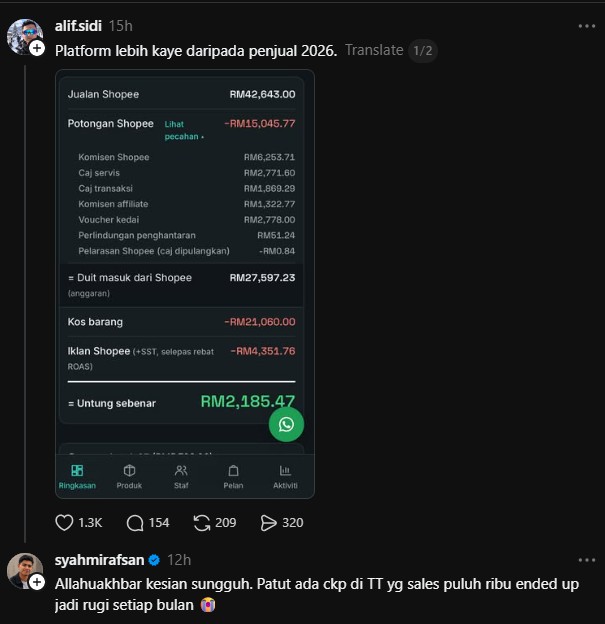
If you sell on Shopee or TikTok Shop, you have probably felt a smaller version of this. This article looks at what changed in 2026, where the money goes, and how to tell whether it is time to build a website of your own. It does not mean leaving the marketplaces. For most sellers that would be a mistake.
What changed in 2026
Both platforms adjusted their fees several times this year. These are the changes we found. Rates differ by category, shop type (Marketplace or Mall) and the programmes you have joined, so check your seller centre for your own numbers.
| Platform | Change | Effective |
|---|---|---|
| Shopee | Commission review for Marketplace sellers | 1 February 2026 |
| Shopee | Commission review for Marketplace and Mall | 21 May 2026 |
| Shopee | Commission update for Marketplace and Mall | 14 August 2026 |
| TikTok Shop | Flat platform support fee of RM0.50 per delivered order (RM0.54 with 8% SST) | 15 February 2026 |
| TikTok Shop | 6% SST on seller shipping fees | September 2026 |
| TikTok Shop | Higher commission for most categories | 31 October 2026 |
Any one of these looks small. Together they are the reason your margin is thinner than it was a year ago, even if your sales are flat or up.
Where the money goes: a worked example
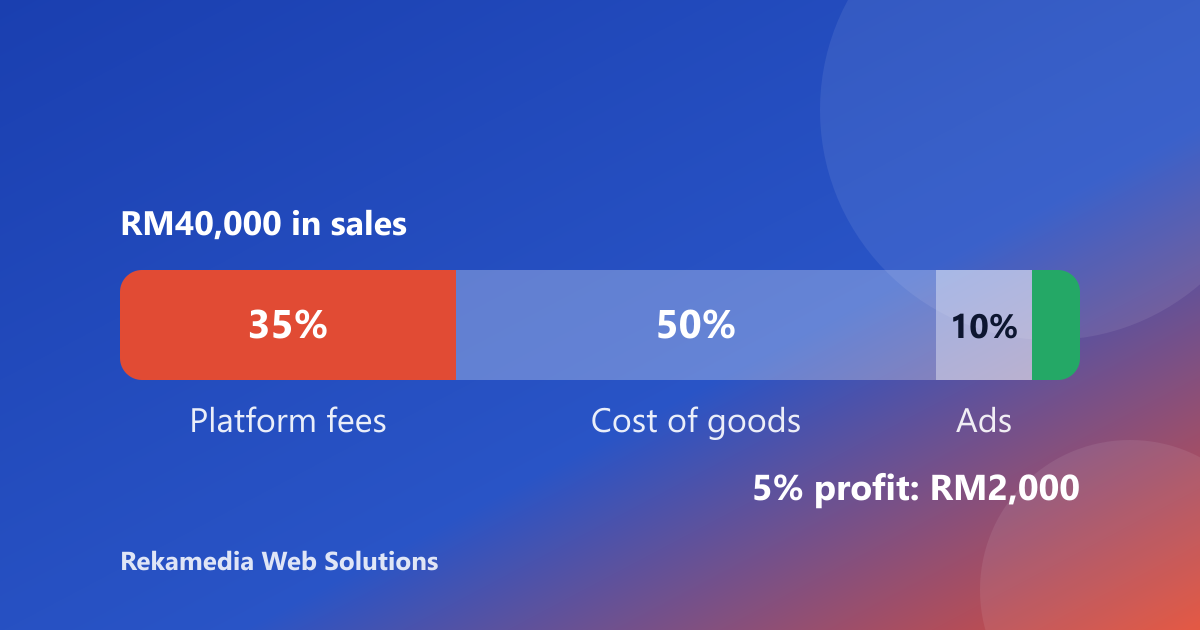
The numbers below are an illustration, not data from a real shop. They are close to what many small sellers describe.
| Item | Amount | Share of sales |
|---|---|---|
| Gross sales | RM40,000 | 100% |
| Platform deductions (commission, service and transaction fees, vouchers, affiliate payouts) | −RM14,000 | 35% |
| Cost of goods | −RM20,000 | 50% |
| Advertising inside the platform | −RM4,000 | 10% |
| Net profit | RM2,000 | 5% |
Platform deductions and ads together come to RM18,000. That is nine times what the seller keeps. You can try your own numbers in our Shopee and TikTok Shop fee calculator.
Part of that bill is a choice. Vouchers and affiliate commission are things you switch on, so it helps to split “fees the platform charges” from “money I spend to get noticed”. The first you cannot negotiate. The second you can tune. Most sellers who run this exercise for the first time find the second number larger than they expected.
You are renting your customers
The fee increase is the visible problem. The bigger one is that the marketplace owns the relationship.
When someone buys from your Shopee shop, they are Shopee’s customer. You usually do not get their email or phone number, and you cannot message them to say a new batch has arrived. The platform decides how your products rank, which campaigns you have to join to stay visible, and what they cost you.
That arrangement carries a few risks:
- You do not own your customer data.
- A change to the ranking algorithm can cut your traffic overnight.
- Fees and policies change on notice, and you only get to accept them.
- Accounts get suspended, sometimes by mistake, and appeals are slow.
- Every seller of a similar product competes on price on the same page.
Marketplaces are good at what they do, but the shop you have built there is not an asset you control.
What a website of your own gives you
| Marketplace | Your own website | |
|---|---|---|
| Commission | Yes, and it can change | None |
| Customer data | Limited | You own name, email and phone |
| Branding | Looks like every other shop | Looks like you |
| Prices and promotions | Follow the platform’s campaign rules | You decide |
| Contacting repeat customers | Limited | WhatsApp, email, remarketing |
| Traffic | Large and already there | You have to build it |
| Long-term value | You do not own the shop | A digital asset you own |
The row that matters most for margin is repeat customers. A buyer who comes back through your own site costs you a payment gateway fee instead of a marketplace commission. Over a year, that difference adds up.
A website is not a shortcut
Before you build anything, be clear about what you are taking on.
- Traffic does not arrive on its own. Shopee brings millions of shoppers with it. Your site starts with none, so you will need search, social media or paid ads to get people in.
- You provide the checkout. That means payment methods like FPX and cards.
- You handle fulfilment and support. Shipping, order tracking and customer questions are yours.
- Someone has to look after the site. Backups, updates and security do not happen by themselves. A hacked or broken shop loses sales the same day, which is why many store owners pay for a maintenance plan.
If you only list products on a website and wait, you will sell very little. The site works when you use it to keep the customers you already paid to win.
The hybrid approach most sellers end up with
You do not have to pick one. The setup that works for most small sellers:
- Keep selling on the marketplaces. They are still the cheapest way to meet new customers.
- Build your own website as the home for your brand.
- Move customers onto channels you own, such as WhatsApp or an email list, where the platform’s rules allow it.
- Give repeat buyers a reason to order from your site, like bundles, early access or a better price.
- Work out your real margin per channel, after fees and ads, so you know where each ringgit of profit comes from.
When to start
Two or more of these usually mean it is time:
| If this sounds like you | Why it matters |
|---|---|
| You have repeat customers you cannot contact | You are paying to win the same buyer again and again |
| Sales are rising but net margin is falling | Fees and ad costs are growing faster than revenue |
| Your product has a brand or story the marketplace flattens | A listing page cannot tell it |
| You want to sell bundles, subscriptions or exclusive products | Platform rules often make these awkward |
| You worry about your account being suspended | One notice can stop all your income |
If none of these apply yet, you can wait. A site built too early, with nobody sending it traffic, is an expense with no return.
What it costs to get started
It depends on what you sell and how much you need the site to do. A simple site that presents your brand and takes enquiries on WhatsApp costs far less than a full online shop with a payment gateway, stock and order management. We scope each build individually and do not publish a flat price for it, because the range is too wide to be useful.
Once a shop is live, the running cost is mainly hosting and upkeep. Our maintenance plans start at RM500 a month and cover backups, updates, security monitoring and edits. If you are comparing that to the marketplace fees in the example above, it is worth running the numbers on your own sales first.
Frequently asked questions
Are Shopee and TikTok Shop fees the same for every seller?
No. They depend on your product category, whether you are a Marketplace or Mall seller, and which programmes you have joined. Your seller centre shows the rates that apply to you.
Should I stop selling on Shopee or TikTok Shop?
Not necessarily. For most sellers the better move is to keep the marketplaces for finding new customers and add a website for the ones who come back.
How much does it cost to build my own online store?
It depends on the scope. A simple brand site is a modest project. A full shop with a payment gateway and order management costs more. Contact us with what you sell and we will give you a figure.
Will my own website get the traffic Shopee does?
Not at first. Traffic comes from search engines, social media and paid ads, and it takes time to build. That is why the hybrid approach works: the marketplaces keep sending you new buyers while your site grows.
The short version
Marketplaces are not going away, and you probably should not leave them. But the customers and sales data your business produces should belong to you, not to the platform. If fees are squeezing your margin and you have buyers who keep coming back, a website of your own is the next thing to build.
Keep reading
Thinking about your own website?
Tell us what you sell and we’ll tell you honestly whether a website of your own makes sense yet. No obligation.
Support hours: Monday–Friday, 9am–5pm. We respond to every request within 24 hours. We often reply over the weekend too, but we don’t promise it.